
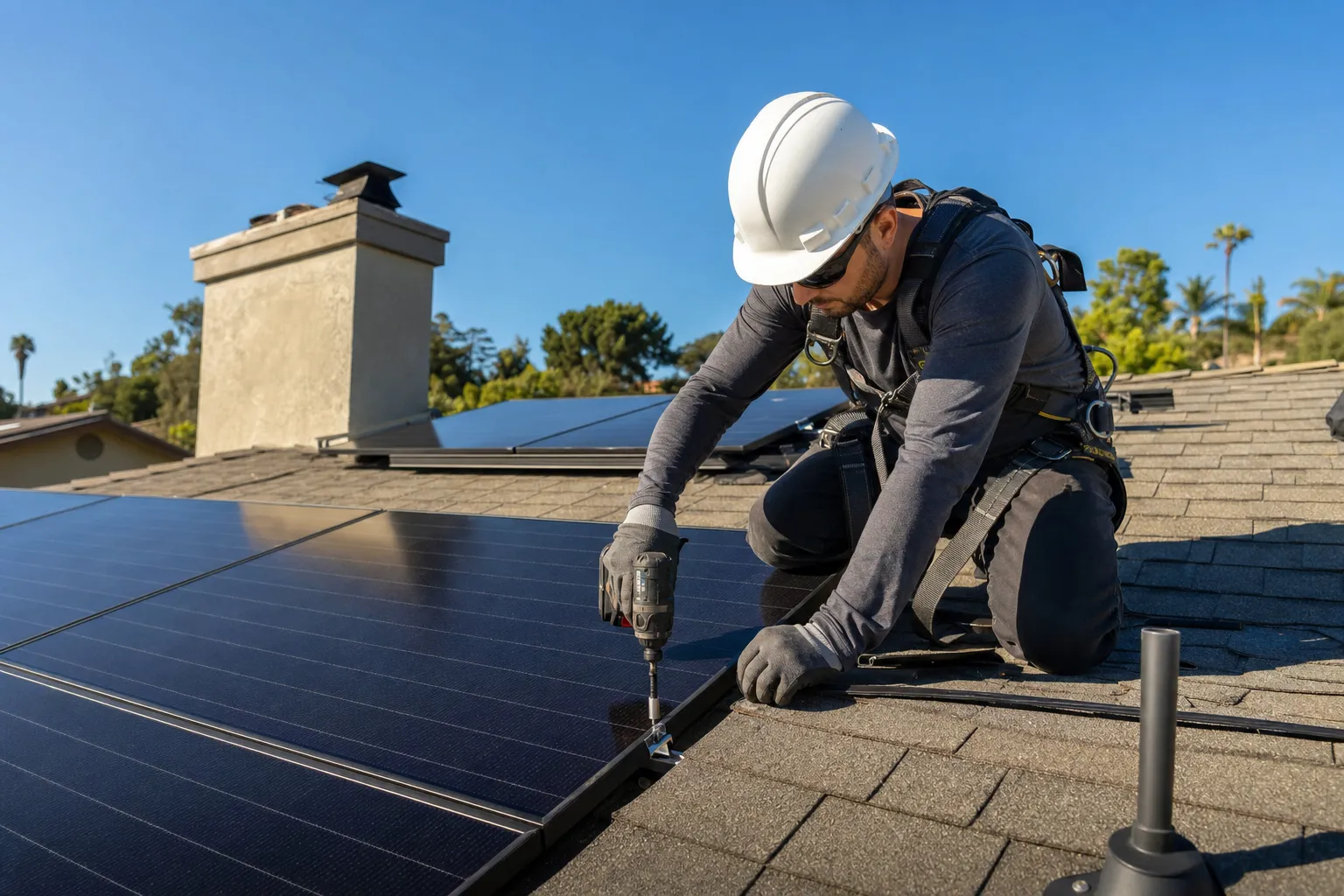
Solar Roof Installation Costs Explained for 2026
Real 2026 price ranges for solar panels and integrated solar roofing, plus the federal tax-credit change every homeowner needs to know before budgeting.
A typical residential solar panel system costs about 2.52 dollars per watt installed in California and 2.60 dollars per watt nationally in 2026. That puts an average California system near 21,000 dollars before any incentives, and a typical national system in the range of 16,000 to 31,000 dollars depending on size. Integrated solar roofing costs more, roughly 3.80 to 7.00 dollars per watt. Note that the 30 percent federal residential tax credit ended on December 31, 2025 for systems you own.
What a Solar System Costs in 2026
| System Size | California Cost | Estimated Annual Output (CA) |
|---|---|---|
| 6 kW | about 15,100 dollars | 8,100 to 10,500 kWh |
| 8 kW | about 20,100 dollars | 10,800 to 14,000 kWh |
| 10 kW | about 25,200 dollars | 13,500 to 17,500 kWh |
The Federal Tax Credit Changed in 2026
This is the single most important cost fact for 2026. The 30 percent federal residential clean energy credit, known as the Section 25D credit, applied to systems placed in service through December 31, 2025. It is no longer available for homeowner-owned systems installed after that date, whether you pay cash or use a solar loan. A federal credit still exists for third-party-owned systems such as leases and power purchase agreements, where the system owner claims it under a different part of the tax code.
What this means for your budget: plan around the real installed price, and treat any older estimate that subtracts a 30 percent homeowner credit as out of date. California incentives and 0 percent-down financing still help make solar affordable.
What Drives the Price of Your Installation
System Size
Bigger systems cost more in total but often less per watt. Size is set by your annual usage, roof space, and how much of your bill you want to offset.
Panels or Integrated Roofing
Traditional panels are the lowest cost per watt. Roof-integrated shingles cost more because they replace the roof surface itself.
Roof Condition
If your roof is over about 10 years old, replacing it before or during the solar project avoids paying to remove and reinstall panels later.
Battery Storage
Adding a home battery for backup and to make the most of California net billing adds roughly 15,000 dollars or more before incentives.
Financing Keeps It Affordable
Green Conception offers 0 percent down and 100 percent financing, so you can move forward without a large upfront payment. The right structure depends on whether you want to own the system or use a lease or power purchase agreement. A free assessment gives you an exact quote for your home, with financing options laid out clearly.
Frequently Asked Questions
How much does a full solar roof installation cost in 2026?
How much does a typical solar system cost in the US?
Is the 30 percent federal solar tax credit still available?
What is the cost difference between solar panels and solar shingles?
Does adding a battery increase the cost?
Explore Related Services
Get a Solar Plan Built for Your Roof
Book a free assessment for an itemized quote, real production numbers, and the financing that fits your home.