
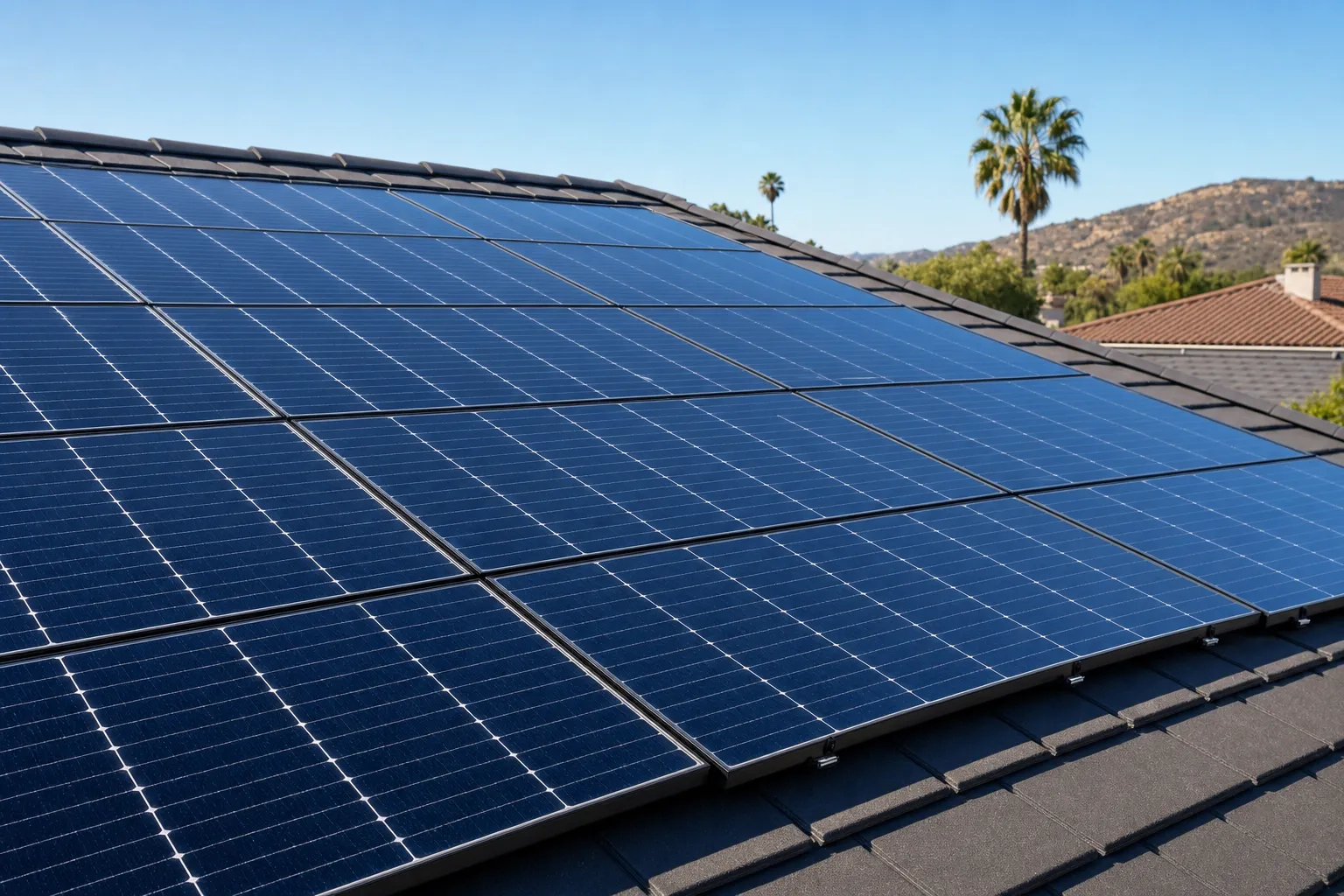
The Best Solar Panels for California Homes
Compare panels by efficiency, warranty and real output, then get a system designed for your roof.
The best solar panel for your California home is the one that produces the most energy on your roof, holds its output for decades and comes with a warranty that is actually honored. For most homes that means a high-efficiency monocrystalline all-black panel in the 400 to 460 watt range from a tier-one manufacturer, professionally installed. Green Conception installs premium panels including JA Solar and REC, sized and placed for your roof, shade and utility usage, under CSLB #964965.
What Makes a Solar Panel Good for a California Home
Three numbers decide most of it. Efficiency tells you how much of the sunlight hitting the panel becomes electricity, which matters when roof space is limited. The power warranty tells you how much output the panel is guaranteed to still make after 25 years. The product warranty covers the hardware itself against defects. A strong residential panel today converts around 21 to 22.6 percent of sunlight, guarantees roughly 88 to 92 percent of its rated output after 25 years, and carries a 25-year product warranty.
California adds two local factors. Summer heat lowers panel output, so a lower temperature coefficient means the panel loses less power on hot afternoons. And many homeowners want an all-black panel for how it looks on the roof. The panels below are chosen with both in mind.
How the Panels We Install Compare
| Panel | Efficiency | Power warranty | Best for |
|---|---|---|---|
| JA Solar 440W Black | 22.5 percent | 25 years | Best value per watt on most roofs |
| REC 460W Alpha Pure-R | 22.6 percent | 25 years | Premium output where roof space is tight |
How to Compare Efficiency Ratings
Panel efficiency is the percentage of sunlight the panel turns into electricity, measured under standard test conditions. A 22 percent panel makes more power per square foot than an 18 percent panel, so on a small or shaded roof, higher efficiency lets you fit more capacity. On a large, open roof, a slightly lower-efficiency panel can deliver the same total system size for less money.
Do not compare efficiency alone. A panel with high efficiency but a weak power warranty or a high temperature coefficient can be beaten in real annual production by a slightly less efficient panel that runs cooler and degrades slower. This is why the design matters as much as the panel.
What to Look For in a Panel Warranty
25-Year Product Warranty
Covers the panel hardware itself against manufacturing defects, not just output.
25-Year Power Warranty
Guarantees a minimum percentage of rated output after 25 years, often around 88 to 92 percent.
Low Degradation Rate
Premium panels lose roughly 0.4 percent output per year, so more of your system is still working decades in.
Manufacturer Backing
A warranty is only as good as the company behind it, so tier-one brands matter.
Workmanship Warranty
Covers the installation itself, which is separate from the panel warranty and comes from your installer.
Low Temperature Coefficient
Less output lost on hot California afternoons, which raises real annual production.
Which Panels Perform Best in Cloudy or Coastal Weather
Coastal and foggy parts of California see more diffuse light than direct sun on many mornings. Monocrystalline panels, which is what Green Conception installs, handle low and diffuse light better than older polycrystalline panels. The practical answer for cloudy conditions is a high-efficiency monocrystalline panel plus a system sized slightly larger to cover lower average sun hours, which is exactly what a proper design accounts for.
No panel makes meaningful power in true darkness or heavy overcast, so if reliability through outages matters to you, the real fix is pairing solar with battery storage rather than chasing a specific panel for cloudy days.
See Which Panels Fit Your Roof
Get a free assessment with a system and panel recommendation built around your roof, shade and utility bill.