
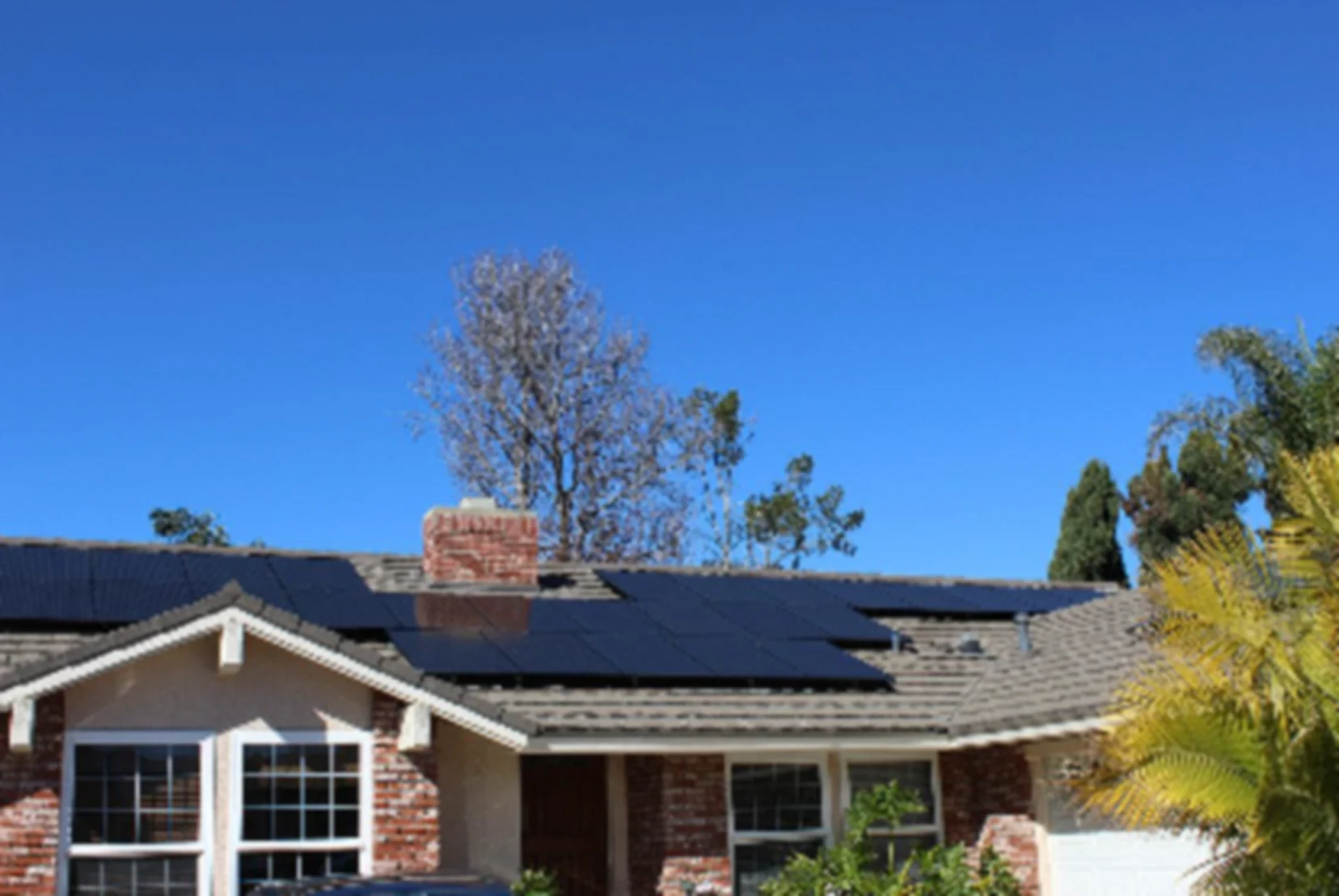
Do Solar Panels Kill Animals? The Facts Behind the “Fry” Claim
Solar panels get warm, not stove-hot. Here is what the research says about solar and wildlife, where the claim likely comes from, and what it means for a rooftop system.
At an October 27, 2026 rally in Lubbock, Texas, President Donald Trump said large solar installations “kill all the animals,” adding that “the animals jump on them and they fry because those black panels are hotter than your stove” (AFP Fact Check). Homeowners have asked us whether that is true. The short answer is no. Here is what the evidence shows.
The short answer
A Cornell University natural resources expert told AFP that the claim that panels fry animals is “not supported by evidence” (AFP). Solar panels do get warm in the sun. Large solar farms can also affect wildlife in real ways, mainly through land use and some bird collisions. But animals touching ordinary photovoltaic (PV) panels and being cooked is not one of them.
Myth 1: “Solar panels are hotter than your stove”
On warm, sunny days, panel surfaces can run about 36–45°F warmer than the surrounding air, reaching roughly 131–158°F (55–70°C) (AFP, citing Cornell’s Leana Zoller). That is similar to other dark surfaces left in the sun. Zoller added that this “does not mean that animals briefly touching or living near panels are being burned.”
The space under the panels is usually cooler than open ground. Studies show panels typically cool the area beneath them, where most small animals live (AFP). Field monitoring at ground-mounted sites has measured air and soil temperatures 1–4°C lower under the panels (Renewable Energy World).
Myth 2: “The animals jump on them and they fry”
Panels are mounted at an angle. As one University of Exeter scientist put it, “you can’t really jump on them either” (AFP). Birds do perch on panel frames and rooftops, the same way they perch on any other roof.
On homes, the issue we actually hear about is the opposite of frying. Pigeons and other birds sometimes nest in the shaded gap under rooftop panels. Installers can usually prevent this with mesh guards around the array edge.
Where the idea likely comes from: concentrated solar
There is one kind of solar plant that has burned birds, and it does not use panels like the ones on your roof. Concentrated solar power (CSP) uses mirrors to focus sunlight onto a receiver to make high-temperature heat. Center for Biological Diversity attorney Howard Crystal pointed to CSP as a possible source of the claim (AFP).
California’s Ivanpah plant in the Mojave Desert is the best-known example. It uses about 170,000 mirrors to concentrate sunlight onto towers. A 2016 Los Angeles Times report estimated that about 6,000 birds die there each year from colliding with the towers or flying through the concentrated beams (Los Angeles Times). One renewable energy and biodiversity researcher told AFP that CSP “is by far the minority technology” on the market (AFP). Ivanpah’s owners agreed to close most of the plant as cheaper PV panels outcompeted it, though California regulators later rejected that deal over grid-reliability concerns (Los Angeles Times).
What the research says about solar farms and birds
Large solar farms do record some bird deaths, mostly from collisions, and researchers disagree about how many. Here are the main published estimates:
| Study | Finding |
|---|---|
| Kosciuch et al. (2020), 10 PV solar farms in the Southwest | An average of 2.49 birds per megawatt per year, from all causes (PLOS ONE) |
| Walston et al. (2016), all U.S. utility-scale solar, including CSP | Roughly 37,800–138,600 birds per year nationwide (Argonne National Laboratory) |
| Smallwood (2022), PV and solar thermal projects | An average of 11.61 birds per megawatt per year at PV projects, and 64.61 at solar thermal projects (Journal of Wildlife Management) |
For scale, the U.S. Fish and Wildlife Service estimates that outdoor cats kill about 2.4 billion birds a year in the United States, and that collisions with building glass kill about 599 million (U.S. Fish and Wildlife Service). Even the preliminary research the White House sent AFP concluded that bird deaths tied to solar facilities were “considerably lower than mortality from other human activities” (AFP).
The real impacts worth taking seriously
Saying panels do not fry animals does not mean solar has no effect on wildlife. Large projects change land. U.S. Geological Survey researchers found that how desert wildlife responds to solar arrays depends on where the farm is built, how it is constructed, and whether mitigation measures are followed (E&E News). Some research has also found that utility-scale solar reduces bat activity at a site (Frontiers in Sustainable Food Systems). These are reasons to site and manage projects carefully, not evidence that panels cook animals.
Animals that can benefit from solar
Some solar sites are now designed to share land with animals. Sheep grazing under panels at an 18-megawatt New York solar facility was studied by the U.S. Geological Survey, which found it produced “agrotechnological synergies” (USGS). Panels also give sheep and other livestock shade (National Laboratory of the Rockies (formerly NREL)).
A 2026 Cornell study found that light sheep grazing at solar sites, about two sheep per hectare, supported 38% more beneficial insects such as wild bees, honey bees, and lady beetles than a mowed plot (SciTechDaily). At a Minnesota solar farm, researchers recorded a twentyfold increase in native bees (E&E News).
What this means for a rooftop system
Most of the debate above is about large solar farms. A home system is different. It sits on a roof that is already built, so it does not clear habitat, and it uses the same PV technology that experts say does not burn animals. If wildlife is a concern for your home, ask your installer about:
- Bird guards to keep pigeons from nesting under the array.
- Where conduit and equipment will be mounted.
- How the system will be inspected and cleaned over time.
Green Conception has installed solar for California homeowners since 2011. If you want real numbers for your roof, start with our solar price page or learn more about our solar installation services.
Frequently asked questions
Do solar panels kill animals?
There is no evidence that ordinary photovoltaic solar panels routinely burn or kill animals that touch them. Experts who reviewed President Trump’s October 2026 claim told AFP it is not supported by evidence. Large solar farms can affect wildlife through habitat change and some bird collisions, which is why siting and monitoring matter.
How hot do solar panels get?
On warm, sunny days, panel surfaces can run about 36–45°F warmer than the surrounding air and reach roughly 131–158°F, according to a Cornell University natural resources expert. That is warm to the touch, but it does not mean animals that briefly touch or live near panels are being burned.
Which kind of solar plant has burned birds?
Concentrated solar power plants, such as Ivanpah in the Mojave Desert, use fields of mirrors to focus sunlight onto towers. Birds flying through that concentrated beam can be burned. Rooftop and most utility-scale solar uses photovoltaic panels, which do not concentrate sunlight that way.
Are rooftop solar panels safe for birds and pets?
There is no evidence rooftop photovoltaic panels fry birds or pets. A rooftop system uses space that is already built on, so it does not clear habitat. The more common rooftop issue is birds nesting in the gap under panels, which an installer can address with guards.
Keep reading
Straight answers before you decide on solar.
How Much Energy a Home Solar Roof Produces
How much electricity a residential solar roof generates per year by system size, and what drives output.
Read the articleIncentives GuideGovernment Incentives for Solar Roof Installations
The solar incentives available to California homeowners in 2026 after the federal credit change.
Read the articleRoof PreparationPlan Roof Replacement With Existing Solar Panels Before Winter Rain
What to check when a roof under existing solar panels may need work before winter rain.
Read the articleGet the facts for your own roof.
See an itemized solar price based on your home, then talk it through with a licensed team.